
Showing posts with label Research. Show all posts
Showing posts with label Research. Show all posts
Wednesday, 12 December 2012


Saturday, 3 November 2012
Changeling(2008)
Changeling is a 2008 film directed by Clint Eastwood. The premise is that Christine(played by Angelina Jolie) is a mother who's son mysteriously disappears one day. After a very public search for him, the police find a boy who claims to be her son, Walter. However after meeting the boy, she finds he is in fact and impostor and the film follows her exploits as she tries to convince everyone that "Walter" is not her son.
This film is quite similar to our own, as it deals with quite similar issues such as the bond between mother and child and losing a child. Christine's emotion driven journey to recover her missing child is the film's driving force, and this is similar to how in our film, Mary's psychosis is what drives the plot in our film.
The film poster for Changeling reflects the serious tone of the production.
 There is a good use of negative space, bringing focus to the shadowy figures of the young boy and Jolie. The colours are quite downplayed, reflecting the older period of the film (the 1920s) as well as the difficult time Jolie's character faces during the course of the film.
The low key lighting on the two figures also reflects the darker undertones- a lot of the film questions the governments involvement in the disappearances and this leads to some serious ideas of whether or not they were purposefully trying to cover up the disappearances of the boys. The young boy;s shadowy image may also represent how he's been taken away from her and her face taking up most of the page, looking down at him may be to show how she is trying to watch over and protect her son.
This film is quite similar to our own, as it deals with quite similar issues such as the bond between mother and child and losing a child. Christine's emotion driven journey to recover her missing child is the film's driving force, and this is similar to how in our film, Mary's psychosis is what drives the plot in our film.
The film poster for Changeling reflects the serious tone of the production.

The low key lighting on the two figures also reflects the darker undertones- a lot of the film questions the governments involvement in the disappearances and this leads to some serious ideas of whether or not they were purposefully trying to cover up the disappearances of the boys. The young boy;s shadowy image may also represent how he's been taken away from her and her face taking up most of the page, looking down at him may be to show how she is trying to watch over and protect her son.
Sight and Sound Magazine

A British film magazine published by the BFI. It includes film reviews as well as retrospective articles, features and interviews. It's almost a halfway point between Empire and Cineaste in terms of content- it does review quite big popular films such as it's recent review of Skyfall, but it also covers independant foreign film Five Broken Cameras as well as their use of much more formal language compared to empire.


This is a scan of a page from Sight and Sound. Like the other magazines I've looked at, it again separates it's text into columns. Unlike Empire though, it's center image doesn't seem like such a focal point, as it;s layout is a bit more spaced out. There is a small text box towards the top of most of there articles, similar to the box on Empire which gives some technical information on the film.
 Sight and Sound also uses different colours occasionally in articles, to make certain bold bits of text stand out even more.
As for the actual language used, as I had said before it';s quite formal. However it is also quite descriptive compared to other magazines, using more adjectives and talking a lot about the feelings and emotions the cinematography creates within the audience.
Cineaste Magazine


Within it's reviews it looks like it uses large images at the top, and then quite clean, uncrowded layouts. In this particular one, there is a bold extract at the center of the page to draw in people.
It also has a online website where it posts up some reviews. This is an extract from one of it's online exclusive reviews.
Friday, 2 November 2012
In the Bedroom(2001)
A 2001 film which tells the story of a young man who has an affair with an older married woman, and his family. During the course of the story, Frank, begins his affair but it abruptly ends when his lover;s husband murders him after a dispute. The film then focuses on his family and how they deal with the loss of Frank, as well as bringing up issues with how each parent treated their son. A lot of the relationships within the film are very similar to that in our film- the mother character in particular has a lot of parallels with Mary Higgin's character, as an overbearing mother who becomes a recluse after the death of her son.
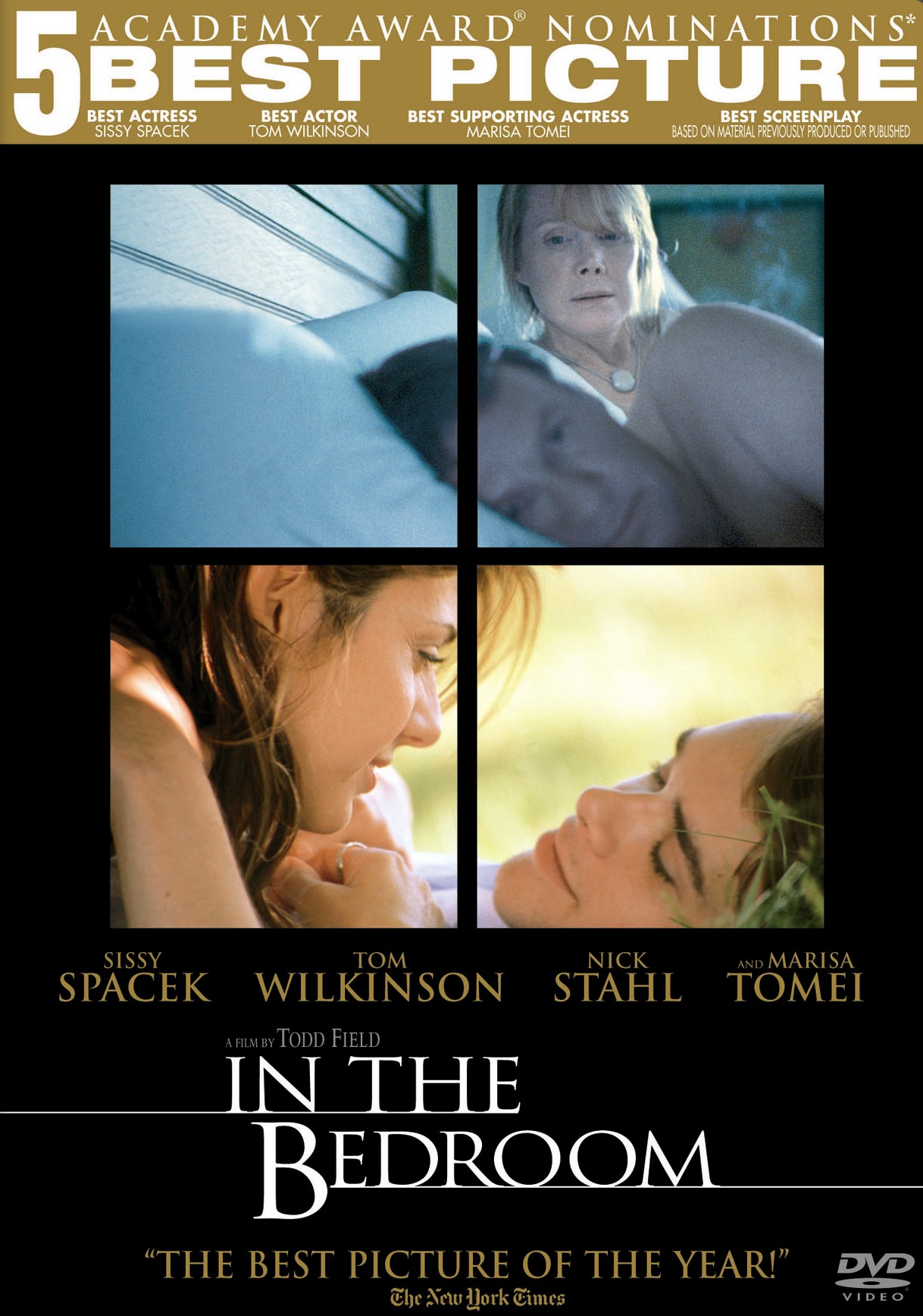
 The layout of this poster reflects the themes of the film quite well. The two images we see here are both set in the bedroom, which refers to the title of the film as well as the location that a lot of the pivotal events of the film take place. The images are also set out in the form of a grid, which is really interesting as it looks as if the viewer is looking intot he bedroom from outside the window.
I also really likt the lighting on the top image- it's very blue and cold. This reflects the emotions of the parents in the film, first worrying about their son and then grieving over his death later on in the film.
I also really likt the lighting on the top image- it's very blue and cold. This reflects the emotions of the parents in the film, first worrying about their son and then grieving over his death later on in the film.
Empire Magazine

A film Magazine that reviews various genres of films, as well as having features, interviews and other types of articles regarding film.
Empire Magazine is a British, monthly film magazine. Empire covers a wide range of film genres, from Fantasy films like The Lord of The Rings trilogy to animated children's films such as Frankenweenie(2012). Although it does review art house films, it mainly focuses on reviewing popular block busters and big budget films.
It also reviews Video games, Books and DVDs.
Empire also has a website which can be found here.
Review style
When starting reviews, there is always a box at the beginning of the article including information about the release date, the director and some other information
 This particular article I looked at starts off with a quote from the film. The language used in this article is standard English however it's written in a casual manner and in a way that grasps the audience's attention. Furthermore, it frequently compares it to the original film, but mostly focuses on reviewing the plot of the story and whether or not the gags were delivered well.
After the review, there is a verdict which summarizes the reviewers opinion on the film.
Thursday, 1 November 2012
Film Threat Magazine

A film magazine that reviews a lot of Indie/cult/alternative films. It originated as a printed magazine in the 80s, reviewing independant films of the time, but was recently remade as the film review website it it now. Like it;s original incarnation, the website also reviews independant films.

The language the reviewers use is very fitting to the sort of films that are featured on the online site, and there is a very quirky tone to the articles.
Reviews often speak a lot about the actual plot and action in the film as well as the characters. It's style is more similar to a blockbuster reviewing magazine in terms of review content, as it's evident it's main purpose is to entertain readers with the reviews rather than inform them. Although it;s reviews are both good and bad, they are always quite enjoyable to read because of the informal style of writing.
Wednesday, 31 October 2012
Ordinary People (1980)
A drama film about a woman who actually loses her first son but is left with another which she can't stand. The film deals with a lot of emotional problems that can occur after the loss of a family member- Conrad, the surviving brother in this film starts out coming back from a psychiatric ward after attempting suicide. It also shows how losing one family member can destroy a family as the main story of the film is the family trying to get back to normal after losing the oldest son and the father trying to hold the family together.


This film poster has a black background, again mirroring the dark tone of the film The central image is a set of three family photos, depicting the surviving family members. This is a really good use of props on the poster, as the photos represent a little bit about the characters and the film itself.
The image of the mother on the opposing end of the picture frames compared to the son represents the strain in their relationship. The fact that the father is placed in the middle shows us that he may be the central character of the film and that he is also the one who is trying to keep the family together and suggests he may be the mediator of the family. Lastly, there is the image of the younger son, Conrad. The glass on his frame is cracked, and this represents the strain the death of his brother has had on him, and how he has "cracked" from the grief.
Sunday, 30 September 2012
Research Table
Research Source
|
Key research findings
|
How is this presented on your blog?
|
Where will you/ How can you use this info in your film? Be as
detailed as you can in your answer
|
Researching Post Traumatic Stress disorder/
Various websites
|
Learned about the effects of
post-traumatic stress disorder
|
Text doc
|
Saw it’s something that could
be affecting our character, seeing as a symptom is flashbacks.
Also saw that the affects are more hasrh when children are involved
which solidifies our story.
|
Repressed memories/
Article in Harvard Magazine
|
Looked into the history of this problem, and learned it isn’t
actually accepted as a disorder, even though it frequently appears in media.
|
Text doc
|
Decided to just continue with the idea that her memories of her son
are repressed and get triggered when she feels particularly down.
|
Losing loved ones/ Interviews with other family & friends as well as self.
|
Learned first hand how people react to talking about lost loved ones.
|
Text documents & Video summary
|
Got a better understanding of what the character might be feelings
and gave me an indication to how the character may act towards the end of the
sequence.
|
Losing a child/ Interview with family member who was separated from
child
|
Again, learned from first hand experience about how the character may
react.
|
Text document
|
Gave the idea of looking at pictures and memories beforehand.
|
Hoarding/ Various websites
|
Learned hoarding is often used to comfort the person, and is more
common with people who suffer from depression
|
Prezi
|
Influenced the film a lot as
it could be really helpful to the visual style. Decided to put this right
into the film and making it clear that she has trouble with letting go.
Furthermore, this makes the idea of collecting the balloons much more
plausible.
|
Coping Mechanisms/ youtube video
|
Learned that people can cope by going into a fantasy world.
|
Text & Video
|
Goes into the idea that her
personality changes quite drastically and she goes into the “Fantasy” her
child is still alive.
|
Depression interview/ Talked to an aunt who’s a psychologist/
|
Learned how people are supposed to treat those who are under
depression.
|
Slide show
|
Linked to the idea we had about her going off into a “fantasy”- her
husband at first tells her to stay back and relax, but this just makes her
feel worse which makes her go off into her fantasy- as well as linking to the
idea that she is quite depressed and starts hoarding thinsg for comfort.
|
Interview about Depression
My auntie is a clinical psychologist, so I took the opportunity to talk to her about depression, and how family members should care for those who have depression.
Friday, 28 September 2012
Character Introduction
There are many facets to the woman who is Mary Higgins. At first, she seems like a demure 50's housewife type, with light coloured hair in a soft, feminine cut around her face. She's not the most talkative and often dresses in smart yet modest clothing preferring warm materials and hues. However after a time it becomes evident that Mary is too quiet, too passive. And that is when one discovers the second facet of Mary's personality. Underneath the spick and span exterior of a homemaker, Mary casts a melancholy aura onto her surroundings. A forlorn gaze, dark shadows under her light eyes and the creases between her brows belie the anguish she holds within her heart.
Mary has a sense of longing, a sense of sadness and even depression about her if you look long enough. She seems calm, but is really bordering on catatonic on some days. She surrounds herself with useless objects, heirlooms and souvenirs, hoping to fill a long empty hole in her soul. She tries to grasp at memories, a flicks through albums or anything that could make her feel like the ones she;s lost aren't gone, but she fails every time.
And then, the last part of Mary';s personality arises. The part that forgets, the part that tries to run from her harsh reality. This part, which is so blinded by it's own optimism that it willingly removes the memories that hurt her the most. Her clouded vision guides her to collect and hoard further, and she feels safe and secure, wrapped up in the delusional state she puts herself into. But then it fades and Mary is, once again, alone in her disheartening existence.
Mary has a sense of longing, a sense of sadness and even depression about her if you look long enough. She seems calm, but is really bordering on catatonic on some days. She surrounds herself with useless objects, heirlooms and souvenirs, hoping to fill a long empty hole in her soul. She tries to grasp at memories, a flicks through albums or anything that could make her feel like the ones she;s lost aren't gone, but she fails every time.
And then, the last part of Mary';s personality arises. The part that forgets, the part that tries to run from her harsh reality. This part, which is so blinded by it's own optimism that it willingly removes the memories that hurt her the most. Her clouded vision guides her to collect and hoard further, and she feels safe and secure, wrapped up in the delusional state she puts herself into. But then it fades and Mary is, once again, alone in her disheartening existence.
Thursday, 27 September 2012
Coping Mechanisms
I watched this YouTube video on coping mechanisms, to see if something like this related to my character. It's a short video defining what a coping mechanism is, and I wondered if this related to the idea of the main character hoarding balloons.
In this video, I noticed the woman speaking talked about "fantasy" as a coping mechanism. This is similar to how the woman in our story goes into a different state of mind- a fantasy of sorts- during the film, where she still believes her son to be alive.
In this video, I noticed the woman speaking talked about "fantasy" as a coping mechanism. This is similar to how the woman in our story goes into a different state of mind- a fantasy of sorts- during the film, where she still believes her son to be alive.
Wednesday, 26 September 2012
Interview: Losing a child
Although I was unable to find anyone who I could talk to who had a chld who'd passed away, I did have a family member who was separated from their child for an extended period. family member will remain anonymous for this interview.
Here are some transcription notes of what they told me about the experience.
>How do you feel about being a parent?
I love it, it's something I always wanted. I love being around children, and I used to look after a lot of younger kids when I was young.
>What was it like when your child wasn't there?
I always remembered the my child and constantly missed them.
I had to cope though, becuase obviously life was still going on around me, that I had to deal with what was in front of me. Knowing they were in a safe place helped,but not being able to freely talk to them was what was frustrating. It was hard- on the surface I had to be strong but underneath I was seething with emotions, anger, frustration.
Later on you get almost used to it but sudden things can trigger emotions about the child. And when these hit, I couldn't control it and would start crying. It got to the point where I couldn;t approach people or things that I directly related to my child.
at the end you put yourself at fault for them not being there.
Here are some transcription notes of what they told me about the experience.
>How do you feel about being a parent?
I love it, it's something I always wanted. I love being around children, and I used to look after a lot of younger kids when I was young.
>What was it like when your child wasn't there?
I always remembered the my child and constantly missed them.
I had to cope though, becuase obviously life was still going on around me, that I had to deal with what was in front of me. Knowing they were in a safe place helped,but not being able to freely talk to them was what was frustrating. It was hard- on the surface I had to be strong but underneath I was seething with emotions, anger, frustration.
Later on you get almost used to it but sudden things can trigger emotions about the child. And when these hit, I couldn't control it and would start crying. It got to the point where I couldn;t approach people or things that I directly related to my child.
at the end you put yourself at fault for them not being there.
Interview with my character
To get a better sense of my character, I did a character interview for them. I wrote it in the perspective of the character.
Interview
I was very close to both my parents. I did't see my paternal grandparents very often but was close to my maternal grandmother and father. I have a younger brother and older sister, and I'm especially close to my brother.
Interview
- What was you're dream as a kid?
I always wanted to be a mum, and have a lot of kids and a big family. I wanted to live out in the countryside, away form the city and in a big house.
- What TV shows do you like watching?
I like watching singing shows like X factor and Britain's Got Talent. I also really liked Pop Idol while it was on and Strictly. I also like cooking programs and reality TV. I watch soap operas too.
- What's your favourite genre of film?
A good Romantic Comedy.
- What was your first job?
I worked as a cashier at Woolworths after I got my O Levels
- What do you dislike about your own personality?
I dislike how I'm a real push over and I'm not very stubborn.
- What do you look for in a partner?
I look for someone who's dependable.
- What's your favourite thing about yourself physically?
I really like my hair. When I was little, my mum would put it in plaits and tie them with ribbons.
- What's your favourite type of restaurant?
My favourite food is noodles, so maybe a Chinese one or Italian?
- Ideal place for a holiday?
A countryside bed and breakfast, out in a quiet part of the country.
- Have you traveled?
I've traveled around England. Once I went to Glasgow for my cousin's wedding, but thats as far as I've gone.
- If your house burnt down, what would you take with you?
A family photo.
- The best present you've ever received?
A silver necklace with an Onix pendant my husband gave me for my 7th wedding anniversary.
- If you were spring cleaning what would you throw out first ad what would you throw out last?
I'd throw away the old newspapers first, and then the magazines and maybe some books if we;re lacking shelf space. The last things I'd consider would be the little knick knacks we've got over the years from friends and family, or on our own visits to places.
- What's your most earliest memory?
I remmeber my first day at school, and walking hand in hand with my parents to my new class.
- What was your relationship with your family?
I was very close to both my parents. I did't see my paternal grandparents very often but was close to my maternal grandmother and father. I have a younger brother and older sister, and I'm especially close to my brother.
Lost Family Members
I interviews people who have lost a family member.
Here is a summary video of my first hand research as well as some personal thoughts on the matter.
Interview with my Mother, over her brother who passed away.
What's it like to lose a family member?
Interview with my friend, who wrote her own answers to the questions.
Here is a summary video of my first hand research as well as some personal thoughts on the matter.
Interview with my Mother, over her brother who passed away.
What's it like to lose a family member?
- "It's a shock. The first thing you feel is disbelief and that it can't be true."
- You want to blame someone else, you start blaming anything you can think of. Bu after time you slowly get to grips with the situation.
- The shock hits you randomly sometimes, even years after. Just being near people who resemble the lost person, or going near things that remind you of them hits you and sends you back into what you felt when you first found out.
Interview with my friend, who wrote her own answers to the questions.
>Who did you lose?
Two years ago I lost my nan to cancer.
>What was it like when you heard the news?
Before this I had never really experienced death and it had
just been something that ive heard about or had seen other people affected by
it but no one in my close family or friends. I always thought that if someone
close to me died that I wouldn’t be completely upset even though that now seems
strange to say I just assumed that I wouldn’t cry or be upset because I
normally deal with other sad things pretty well and don’t often cry. Originally
my cousin had been acting weird and
didn’t want to talk or go out and I just thought she was being over reactive
because my nan was ill but surely she would get better. But the next day my
parents told me that my nan was ill and that she was most likely gonna die. Up
unitl then my nan had been ill but everyone has been ill before but they get
better and everythings fine. Death just seemed like such a foreign concept to
me at that time.
>What was your first reaction?
Everything hurt my chest literally like it was going to
explode and I ran away and locked myself in my room and hid from the world. My
parents eventually got me to come out and said that I shouldn’t be like that
but I didn’t understand how we were supposed to go on and live or just even
watch tv if I knew that my nan was going to die and there was nothing I could
do about it.
>How did you cope with the loss at the time?
I hid I hoped that if I didn’t acknowledge the problem then
it wouldn’t exist or come true. My view on the world and things like religion
changed a lot in the weeks that my nan became worse. How are we supposed to
believe and love a god we created this world and made things like cancer or let
people die? The explanation of its their time or they will be in a better place
are nonsense why would God kill my nan when she had done nothing wrong but
other people who murder or sin everyday can walk around and live like nothing
is wrong. Why can a thing so horrible and destructive exist in a world that god
created if he is so wonderful and loving. At the time I couldn’t really cope
with it especially with something like cancer where you have to watch a person
deteriorate and forget who you are and become just a shell of a person. That
person that you loved and had so many memories with are now gone they are
forgotten and that person doesn’t even know who you are anymore. Saying goodbye
to them isn’t even possible because they don’t know who you are just a nameless
person surrounding them in the hospital bed.
>How do you cope with it now?
All the time I felt that I had to take care of my family and
not let them be sad and take away their pain but that’s whats worse is that
there was nothing I could do about it I couldn’t do anything I was useless.
They say that time is supposed to help with death but I don’t think it does
time does nothing it doesn’t make thinking about them any less painful or
horrible. Time only makes you forget and although it’s the most excruciating
pain I don’t want I to go away because that is all I have left of my nan and if
I lose that pain then I feel that im losing her.
Tuesday, 25 September 2012
Repressed Memories
The woman in our story suffers from repressed memories of her son's death, and so I wanted to look into Repressed Memories and what they actually were as well as what causes them.
What I found out was that Repressed Memories, known by the diagnostic term "Dissociative Amnesia", is actually a hypothetical concept which actually has sparse evidence backing it as an actual neurological condition. The descriptions of Repressed Memories are memories that have been locked away, instead of forgotten or never registered, making it different from Amnesia. From what accounts have been found, they are often of traumatic experiences that have been locked away deep in the subconscious so the affected can process.
From and Article I read on Harvard Magazine's website, written by Ashley Pettus, I learned a few facts of studies done into Repressed Memories.
In the article, I read that there were some cases of repressed memories in the news during the 80s , when people were claiming to have memories of sexual assault as children and many court cases were started. However, these were dropped within a decade as the accusers had lost conviction in their cases after speaking about it to therapists.
Recently, a Harvard Professor named Harrison Pope conducted a study to explore how many cases of repressed memory occurred throughout history. To do this he looked at accounts of it in works of Fiction, however the earliest examples he could find were mostly from the 19th century; such as Dickens' Tale of Two Cities. This led him and his colleagues to believe that dissociative amnesia is not an actual neurological function, but instead a cultural condition that has been popularized by Hollywood and psychoanalysis. This theory is due to the lack of basis there is for the condition, and how there were no real evidence of it before the 1800s.
Pope also stated that cultural differences at those times could not account for the lack of evidence as although people did not understand, for example, hallucinations, there were still accounts of this. However, an irregular occurrence such as repressed memories has not been noted and therefore is unlikely to actually occur.
However, soon after publishing this paper, it was found that a work of fiction(namely the opera Nina) which predated the 1800s had an account of repressed memory, though Pope still doubted the legitimacy of the condition.
Nevertheless, the idea of repressed memories are still disputed in psychological circles.
What I found out was that Repressed Memories, known by the diagnostic term "Dissociative Amnesia", is actually a hypothetical concept which actually has sparse evidence backing it as an actual neurological condition. The descriptions of Repressed Memories are memories that have been locked away, instead of forgotten or never registered, making it different from Amnesia. From what accounts have been found, they are often of traumatic experiences that have been locked away deep in the subconscious so the affected can process.
From and Article I read on Harvard Magazine's website, written by Ashley Pettus, I learned a few facts of studies done into Repressed Memories.
In the article, I read that there were some cases of repressed memories in the news during the 80s , when people were claiming to have memories of sexual assault as children and many court cases were started. However, these were dropped within a decade as the accusers had lost conviction in their cases after speaking about it to therapists.
Recently, a Harvard Professor named Harrison Pope conducted a study to explore how many cases of repressed memory occurred throughout history. To do this he looked at accounts of it in works of Fiction, however the earliest examples he could find were mostly from the 19th century; such as Dickens' Tale of Two Cities. This led him and his colleagues to believe that dissociative amnesia is not an actual neurological function, but instead a cultural condition that has been popularized by Hollywood and psychoanalysis. This theory is due to the lack of basis there is for the condition, and how there were no real evidence of it before the 1800s.
Pope also stated that cultural differences at those times could not account for the lack of evidence as although people did not understand, for example, hallucinations, there were still accounts of this. However, an irregular occurrence such as repressed memories has not been noted and therefore is unlikely to actually occur.
However, soon after publishing this paper, it was found that a work of fiction(namely the opera Nina) which predated the 1800s had an account of repressed memory, though Pope still doubted the legitimacy of the condition.
Nevertheless, the idea of repressed memories are still disputed in psychological circles.
Monday, 24 September 2012
Post Traumatic Stress Disorder
Starting work on research, I began to look into things that cause abnormal behavior in people, particularly effects of trauma and stress.
>So first I looked into Post Traumatic Stress disorder. From what I read in a Wikipedia article, PTSD is an anxiety disorder and usually caused by the threat of violence against a person or someone close to them, if not an actual violent act. It's also much more prevalent and long lasting then other similar disorders.
>This would work well with our story and the effects of the trauma the woman suffers lasts for many years on wards.The symptoms of the disorder also include flashbacks and re-experiencing the trauma, which again goes with the ideas we had.
From other articles, I began researching into more depth about the disorder.
What Causes PTSD?
- Caused by dangerous events either aimed at us or watching something harmful happening to someone close.
- In this sense, if the woman watched her son dying, it could have triggered this disorder.
- Examples of events could have happened to the woman could be a serious accident such as a car crash, a violent assault or even her son being diagnosed with a disease and dying quite soon and suddenly from it.
The Affects of PTSD
- Symptoms can start anywhere from a few weeks to six months after the event.
- Symptoms include Flashbacks to the event, Numbing the event out and becoming highly aware.
- The subject in our film is much more the type who blocks out- in that she's living in a dream world where her son is still alive but then relives the trauma when she remembers.
- However the avoidance and numbing descriptions I've seen is quite different- the symptoms stated shows the subjects become enthralled in puzzles or jigsaws which distract them from thinking about it, or even become emotionally numb so that they don;t have to deal with it.
- This is quite different to the woman who is carrying on with like as if the incident never happened.
- There are other symptoms, such as substance abuse, depression, panic and fear, muscle aches and headaches that are associated with PTSD
- According to the article, after a traumatic experiencem, most people do some kind of signs of PTSD, although they may not have it.
- Some things that can make the disorder worse are:
- are sudden and unexpected
- go on for a long time
- are when you are trapped and can’t get away
- are man-made
- cause many deaths
- cause mutilation and loss of arms or legs
- involve children.
Two of these things (involve children and are sudden and unexpected) are involved in the incident with the woman in our story, which would help add to the symptoms she has.
From the same article, these are ways to help PTSD
Do ………
- keep life as normal as possible
- get back to your usual routine
- talk about what happened to someone you trust
- try relaxation exercises
- go back to work
- eat and exercise regularly
- go back to where the traumatic event happened
- take time to be with family and friends
- be careful when driving – your concentration may be poor
- be more careful generally – accidents are more likely at this time
- speak to a doctor
- expect to get better .
Don’t ……..
- beat yourself up about it - PTSD symptoms are not a sign of weakness. They are a normal reaction, of normal people, to terrifying experiences.
- bottle up your feelings. If you have developed PTSD symptoms, don’t keep it to yourself because treatment is usually very successful.
- avoid talking about it
- expect the memories to go away immediately; they may be with you for quite some time
- expect too much of yourself. Cut yourself a bit of slack while you adjust to what has happened.
- stay away from other people
- drink lots of alcohol or coffee or smoke more
- get overtired
- miss meals
- take holidays on your own.
[The bold are things the main character does do- she tries to bottle up her feelings and just go back to the normal routine, but effectively blocks out her memories and is in denial about what happened.]
And things that can interfere with getting better:
You may find that other people may:
- not let you talk about it
- avoid you
- be angry with you
- think of you as weak
- blame you.
Subscribe to:
Posts (Atom)