Showing posts with label Film Posters. Show all posts

Saturday, 3 November 2012

Changeling(2008)

Changeling is a 2008 film directed by Clint Eastwood. The premise is that Christine(played by Angelina Jolie) is a mother who's son mysteriously disappears one day. After a very public search for him, the police find a boy who claims to be her son, Walter. However after meeting the boy, she finds he is in fact and impostor and the film follows her exploits as she tries to convince everyone that "Walter" is not her son.

This film is quite similar to our own, as it deals with quite similar issues such as the bond between mother and child and losing a child. Christine's emotion driven journey to recover her missing child is the film's driving force, and this is similar to how in our film, Mary's psychosis is what drives the plot in our film.

The film poster for Changeling reflects the serious tone of the production.
There is a good use of negative space, bringing focus to the shadowy figures of the young boy and Jolie. The colours are quite downplayed, reflecting the older period of the film (the 1920s) as well as the difficult time Jolie's character faces during the course of the film.

The low key lighting on the two figures also reflects the darker undertones- a lot of the film questions the governments involvement in the disappearances  and this leads to some serious ideas of whether or not they were purposefully trying to cover up the disappearances of the boys. The young boy;s shadowy image may also represent how he's been taken away from her and her face taking up most of the page, looking down at him may be to show how she is trying to watch over and protect her son.

Friday, 2 November 2012

In the Bedroom(2001)

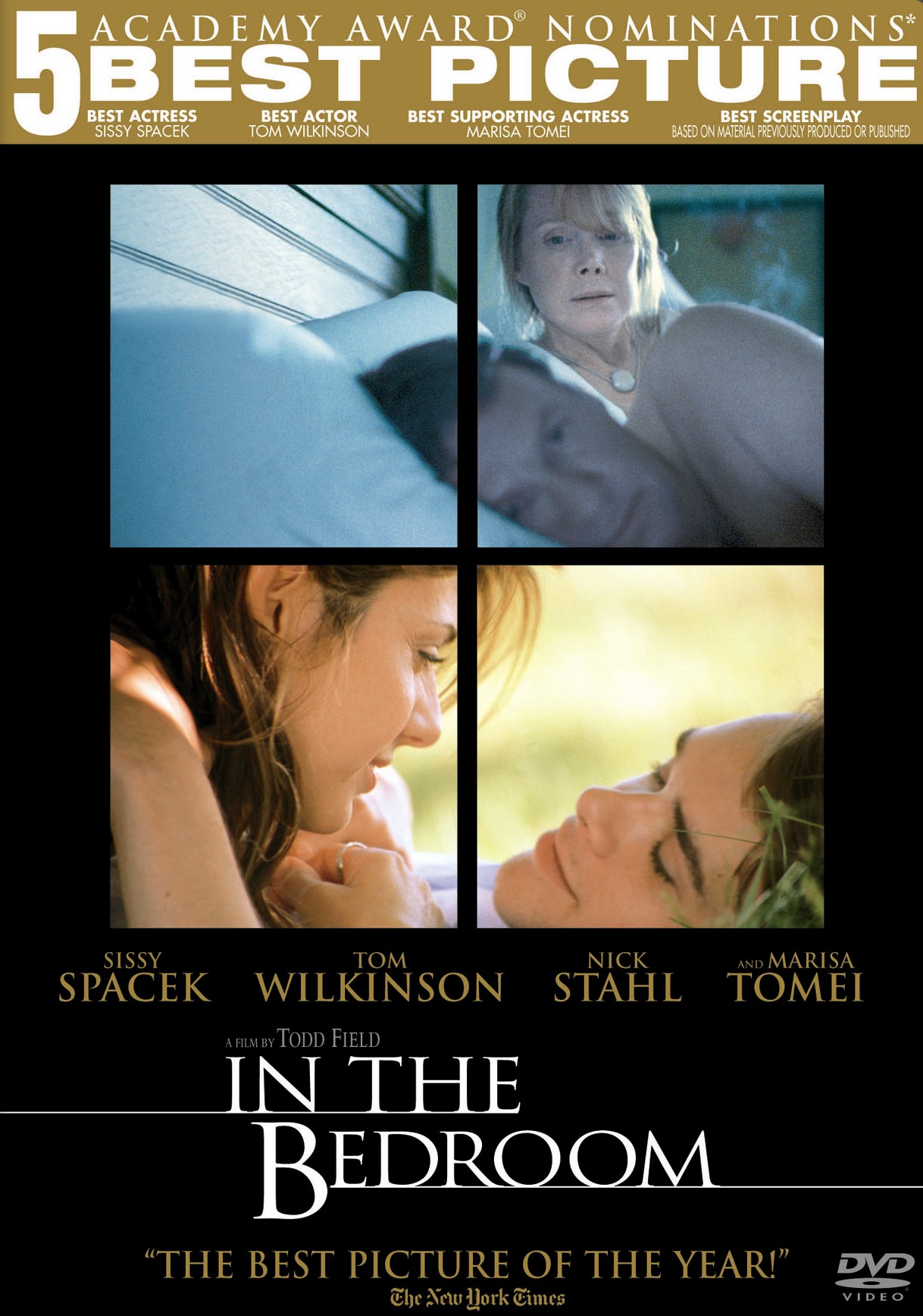
A 2001 film which tells the story of a young man who has an affair with an older married woman, and his family. During the course of the story, Frank, begins his affair but it abruptly ends when his lover;s husband murders him after a dispute. The film then focuses on his family and how they deal with the loss of Frank, as well as bringing up issues with how each parent treated their son. A lot of the relationships within the film are very similar to that in our film- the mother character in particular has a lot of parallels with Mary Higgin's character, as an overbearing mother who becomes a recluse after the death of her son.

The layout of this poster reflects the themes of the film quite well. The two images we see here are both set in the bedroom, which refers to the title of the film as well as the location that a lot of the pivotal events of the film take place. The images are also set out in the form of a grid, which is really interesting as it looks as if the viewer is looking intot he bedroom from outside the window.

I also really likt the lighting on the top image- it's very blue and cold. This reflects the emotions of the parents in the film, first worrying about their son and then grieving over his death later on in the film.

Wednesday, 31 October 2012

Ordinary People (1980)

A drama film about a woman who actually loses her first son but is left with another which she can't stand. The film deals with a lot of emotional problems that can occur after the loss of a family member- Conrad, the surviving brother in this film starts out coming back from a psychiatric ward after attempting suicide. It also shows how losing one family member can destroy a family as the main story of the film is the family trying to get back to normal after losing the oldest son and the father trying to hold the family together.


This film poster has a black background, again mirroring the dark tone of the film The central image is a set of three family photos, depicting the surviving family members. This is a really good use of props on the poster, as the photos represent a little bit about the characters and the film itself. 

The image of the mother on the opposing end of the picture frames compared to the son represents the strain in their relationship. The fact that the father is placed in the middle shows us that he may be the central character of the film and that he is also the one who is trying to keep the family together and suggests he may be the mediator of the family. Lastly, there is the image of the younger son, Conrad. The glass on his frame is cracked, and this represents the strain the death of his brother has had on him, and how he has "cracked" from the grief.